Shortages, Supply Chains, and Systemic Gaps: The Difficult Path Chloroquine Travels to Reach American Patients
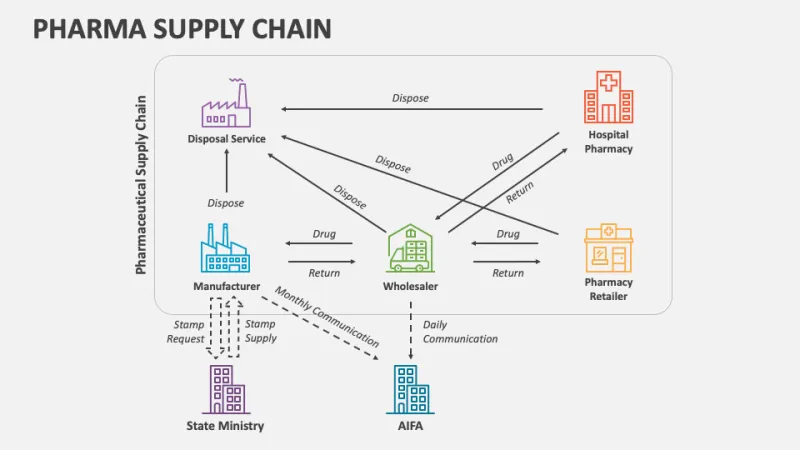
Photo: pharmaceutical supply chain warehouse medicine distribution logistics, via www.collidu.com
An Essential Drug With an Uncertain Journey
For a medication with more than seventy years of clinical history, chloroquine occupies a peculiar position in the American pharmaceutical landscape: simultaneously familiar and difficult to reliably obtain. Hydroxychloroquine, its widely prescribed derivative, has become a standard-of-care therapy for millions of Americans with lupus and rheumatoid arthritis. Yet patients, pharmacists, and prescribing physicians across the country have periodically encountered shortages, regional disparities, and procurement headaches that belie the drug's long-established status.
Understanding why access to chloroquine and HCQ remains complicated requires tracing the drug's journey from the earliest stages of production through a complex, globally interconnected supply chain — and examining the structural vulnerabilities that have made that journey unpredictable.
Where the Drug Begins: Upstream Manufacturing Realities
The story of chloroquine's supply challenges begins well before a tablet reaches a pharmacy shelf. Like the majority of generic pharmaceuticals consumed in the United States, chloroquine and hydroxychloroquine rely heavily on active pharmaceutical ingredients (APIs) manufactured abroad — predominantly in India and China. These two countries collectively supply the bulk of API production for the global generics market, including the raw chemical compounds that domestic and international drug manufacturers then formulate into finished dosage forms.
This concentration of upstream production in a small number of geographic regions creates inherent fragility. Regulatory actions by the FDA against foreign manufacturing facilities, natural disasters, labor disruptions, or geopolitical tensions can all reverberate downstream, constraining the supply of finished product available to American wholesalers and pharmacies. The FDA's Foreign Drug Inspection Program has flagged quality and compliance issues at various API facilities over the years, occasionally triggering import alerts that temporarily restrict the flow of materials.
Domestic finished-dose manufacturing of HCQ is handled by a relatively small number of companies. When one or more of these manufacturers encounters a production disruption, the limited number of alternative suppliers means that shortages can materialize quickly and persist for months.
The Pandemic Inflection Point
No examination of chloroquine's supply chain challenges would be complete without reckoning with the events of 2020. Early in the COVID-19 pandemic, unverified claims about chloroquine and hydroxychloroquine as potential antiviral treatments generated an extraordinary surge in demand. Prescriptions for HCQ increased dramatically in a matter of weeks — driven not by rheumatologic need but by speculative use among individuals without autoimmune disease and, in some cases, by stockpiling at the institutional level.
The consequences for patients who depended on HCQ for lupus or rheumatoid arthritis were immediate and serious. Pharmacies in cities from New York to Los Angeles reported being unable to fill existing prescriptions. Some patients went days or weeks without their maintenance medication — a disruption that, for lupus patients in particular, carried real risk of disease flare and organ damage.
Although the FDA ultimately revoked the Emergency Use Authorization it had issued for COVID-19 indications after clinical trials failed to demonstrate benefit, the episode exposed the precariousness of supply chains that had previously operated largely beneath public awareness. It also prompted renewed scrutiny of domestic manufacturing capacity and strategic stockpile policies.
Regional Disparities: Not All Patients Face Equal Barriers
Even outside of crisis conditions, access to chloroquine and HCQ is not uniformly distributed across the United States. Rural communities and underserved urban areas frequently contend with limited pharmacy infrastructure — fewer independent pharmacies, reduced specialty pharmacy access, and greater dependence on large retail chains that may not stock less commonly dispensed formulations.
Patients in these regions who require compounded formulations of chloroquine — for instance, liquid preparations for pediatric use or patients with swallowing difficulties — face additional barriers, as compounding pharmacies capable of meeting FDA standards are unevenly distributed geographically. Mail-order pharmacy services have expanded access for some patients, but this model introduces its own challenges around timely delivery, temperature-sensitive shipping, and the inability to address urgent needs.
Insurance coverage also intersects with geography in ways that affect access. Medicaid formularies vary by state, and in some states, prior authorization requirements for HCQ create delays that can interrupt therapy. Patients in states with less generous Medicaid programs or higher rates of underinsurance may find themselves rationing medication or foregoing refills due to out-of-pocket cost concerns.
Regulatory Considerations and the FDA's Role
The FDA plays a multifaceted role in chloroquine's supply dynamics. On one hand, the agency's oversight of manufacturing quality is essential to ensuring that drugs reaching American patients are safe and effective. On the other hand, enforcement actions — while necessary — can temporarily reduce the pool of approved suppliers, tightening availability.
The agency maintains a Drug Shortage Database that tracks current and resolved shortages, providing a degree of transparency that allows healthcare systems to anticipate and plan for supply constraints. However, the database relies on voluntary reporting from manufacturers, and not all supply disruptions are captured in real time. Clinicians and pharmacists have noted that ground-level shortages sometimes precede official shortage designations by days or weeks.
The FDA has also taken steps to encourage domestic manufacturing resilience through programs that incentivize onshoring of API production. Legislative efforts, including provisions in the CARES Act of 2020, directed resources toward strengthening domestic pharmaceutical supply chains. Progress has been incremental, and the structural dependence on foreign API suppliers remains largely intact.
Practical Guidance for Patients and Clinicians
For patients currently prescribed chloroquine or hydroxychloroquine, several proactive strategies can help mitigate the impact of supply disruptions.
First, maintaining open communication with both the prescribing physician and the dispensing pharmacy is essential. Pharmacists are often the first to identify incoming shortages and may be able to identify alternative suppliers, switch to a therapeutically equivalent formulation, or facilitate a timely transfer to a pharmacy with available stock.
Second, patients should be aware of patient assistance programs offered by manufacturers, which can provide medications at reduced or no cost to qualifying individuals. Organizations such as the Lupus Foundation of America and the Arthritis Foundation also maintain resources connecting patients with medication access support.
Third, clinicians prescribing these medications for chronic conditions should consider prescribing practices that facilitate continuity — including writing prescriptions for ninety-day supplies where clinically appropriate and covered by insurance, reducing the frequency of refill transactions that can expose patients to inventory gaps at the pharmacy level.
Finally, healthcare providers managing patients on long-term HCQ therapy should discuss contingency plans during routine appointments. Understanding a patient's pharmacy access, insurance situation, and geographic constraints allows for more proactive management if a supply disruption does occur.
Toward Greater Resilience
The challenges surrounding chloroquine and hydroxychloroquine availability in the United States are not the product of any single failure, but rather the cumulative result of structural decisions made across decades of pharmaceutical policy, manufacturing economics, and healthcare infrastructure investment. Addressing them meaningfully will require sustained attention from regulators, manufacturers, payers, and healthcare systems alike.
For patients living with autoimmune disease, for whom these medications are not optional but essential, the stakes of supply chain fragility are intensely personal. A more transparent, resilient, and equitable distribution system is not merely a policy aspiration — it is a clinical imperative.