Approved on Paper, Absent in Practice: How Rural America Gets Left Behind on Chloroquine Access
When a medication clears the FDA's rigorous approval process, there is a widespread assumption — among patients, policymakers, and even some clinicians — that the hard work is done. The drug exists. It is legal. It is available. For patients in major metropolitan areas with dense pharmacy networks and well-resourced health systems, that assumption is largely reasonable. For the roughly 46 million Americans living in rural communities, it frequently is not.
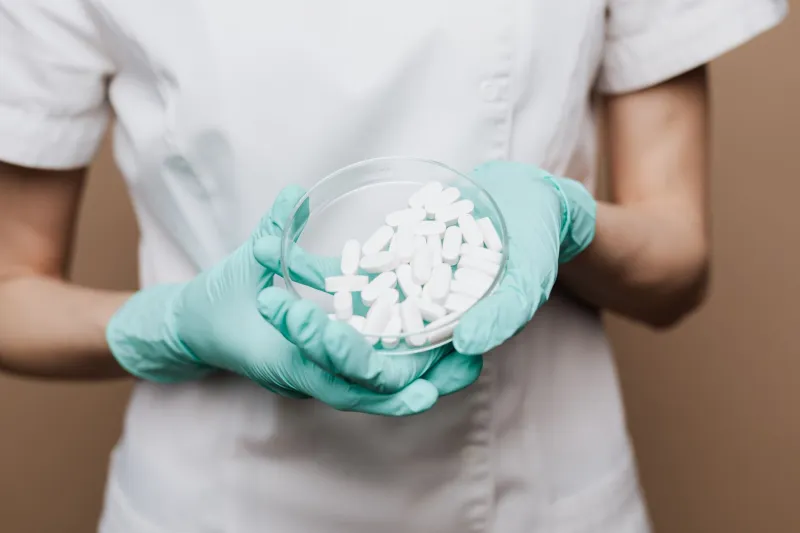
Chloroquine phosphate offers a striking illustration of this divide. Decades-old, generically manufactured, and priced at a fraction of many modern alternatives, it carries FDA approval for malaria prophylaxis and treatment as well as for certain autoimmune conditions including lupus erythematosus and rheumatoid arthritis. By any conventional measure of pharmaceutical access — regulatory standing, cost, clinical familiarity — it should be among the easiest medications to obtain in the United States. In practice, for patients in underserved rural regions, it is anything but.
The Distance Problem No One Talks About
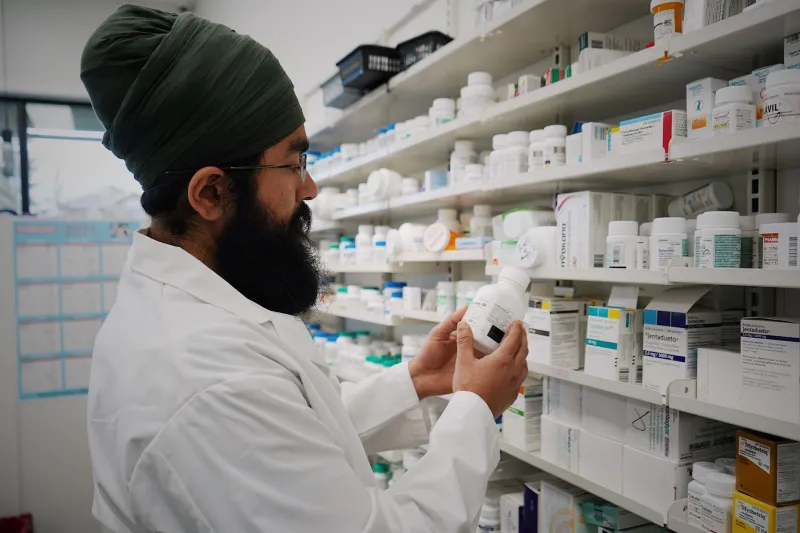
Rural pharmacy infrastructure in the United States has been contracting for years. Between independent pharmacy closures driven by reimbursement pressures and the consolidation of retail chains into urban and suburban corridors, many rural counties now operate with only one or two dispensing pharmacies — if any. A 2023 report from the National Rural Health Association estimated that more than 600 rural counties lack a single community pharmacy, forcing residents to travel distances that can exceed 40 miles one way for prescription services.
For a medication like chloroquine, which is not considered a high-volume seller by most pharmacy metrics, stocking decisions become particularly consequential. Pharmacies operating on thin margins prioritize inventory that moves reliably. Chloroquine, prescribed less frequently than hydroxychloroquine in rheumatology practices and largely displaced by atovaquone-proguanil in travel medicine, often fails to meet that threshold. The result is a compounding problem: rural pharmacies that do exist may simply not carry it, and the nearest alternative may be hours away.
Dr. Patricia Holloway, a family medicine physician practicing in rural eastern Kentucky, describes the situation with understated frustration. "I can write the prescription. The patient can afford it. But if the nearest pharmacy that stocks it is in Lexington, and my patient doesn't have reliable transportation or can't take a day off work, that prescription might as well not exist."
Telemedicine's Incomplete Promise
The rapid expansion of telehealth services during and after the COVID-19 pandemic was heralded as a potential equalizer for rural healthcare access. For some services — mental health consultations, chronic disease monitoring, follow-up appointments — it has delivered meaningful improvements. For medication access, the picture is more complicated.
Telemedicine can close the prescriber gap: a patient in a rural area can now consult with a rheumatologist or infectious disease specialist in a major city without the burden of travel. But the prescription generated from that consultation still needs to be filled locally. When local pharmacy infrastructure is inadequate, the telemedicine appointment produces a document that the patient cannot act on.
There is also the matter of connectivity itself. Broadband access in rural America remains uneven despite significant federal investment through programs like the Rural Digital Opportunity Fund. Video-based telehealth consultations — often required for new patient evaluations and controlled substance discussions — are functionally inaccessible to patients without reliable high-speed internet. For those patients, the digital bridge to urban medical expertise simply does not exist.
Distribution Infrastructure and the Last Mile
Beyond the pharmacy counter, the broader pharmaceutical distribution network introduces additional friction. Chloroquine is not a controlled substance, and it does not require cold-chain logistics. On those dimensions, it is a straightforward product to ship. Yet mail-order pharmacy services, which might theoretically bridge the rural gap, present their own obstacles.
Many rural patients — particularly older adults managing autoimmune conditions — are unfamiliar with or distrustful of mail-order pharmacy systems. Enrollment processes can be bureaucratically dense. Insurance formularies do not always support mail-order dispensing for every covered medication. And for patients managing an acute malaria prophylaxis need before international travel, the timelines associated with mail-order fulfillment may be impractical.
Marcos Delgado, a community health worker operating in the Texas Panhandle, has observed these friction points firsthand. "A lot of my patients assume that if the doctor prescribed it, they can get it at the local pharmacy. When that's not true, they don't always know what to do next. Some of them just don't fill it."
The Autoimmune Patient's Particular Burden
For patients managing lupus or rheumatoid arthritis with chloroquine as part of a long-term treatment regimen, the access problem is not episodic — it is chronic. These patients require consistent, uninterrupted supply to maintain disease control. A gap of even a few weeks can result in disease flares that carry their own clinical and economic costs: emergency department visits, escalation to more expensive therapies, lost workdays.
Rural patients with autoimmune conditions already face higher rates of delayed diagnosis and specialist access. Layering a medication access barrier onto that existing disadvantage creates a compounding disadvantage that is difficult to reverse once established. Clinicians who work in federally qualified health centers serving rural populations report that formulary limitations and local pharmacy gaps are among the most common reasons patients on chloroquine therapy experience preventable interruptions.
What Structural Remedies Look Like
Addressing the rural access gap for chloroquine — and for affordable generic medications more broadly — requires interventions at multiple levels of the healthcare system.
At the pharmacy infrastructure level, state and federal programs that incentivize rural pharmacy operation or support telepharmacy models represent one avenue. Telepharmacy, in which a licensed pharmacist supervises dispensing at a remote location via telecommunications technology, has shown promise in several states as a means of maintaining medication access in communities that cannot sustain a full-service pharmacy.
At the distribution level, expanded partnerships between federally qualified health centers and direct-dispensing programs could reduce reliance on community pharmacy networks that may not serve rural populations adequately. Some health centers have begun operating in-house dispensaries for high-need generic medications, a model that sidesteps retail pharmacy gaps entirely.
At the prescriber and patient education level, greater awareness of mail-order pharmacy options — including step-by-step enrollment support — could improve uptake among patients who would benefit but lack the navigational resources to access these services independently.
The Broader Principle at Stake
Chloroquine's rural access story is not unique. It reflects a systemic reality that affects dozens of affordable, clinically valuable generic medications across the country. What makes chloroquine a particularly instructive case is the magnitude of the gap between its theoretical accessibility and its practical availability. A drug that costs pennies per dose and carries decades of clinical evidence should not be functionally out of reach for patients in rural America. That it often is reveals something important about where the American healthcare system's failures are concentrated — and who bears the cost of those failures.
FDA approval, in the end, is a statement about a drug's safety and efficacy profile. It says nothing about whether the patient who needs it can get it. In rural America, that distinction carries real weight.